
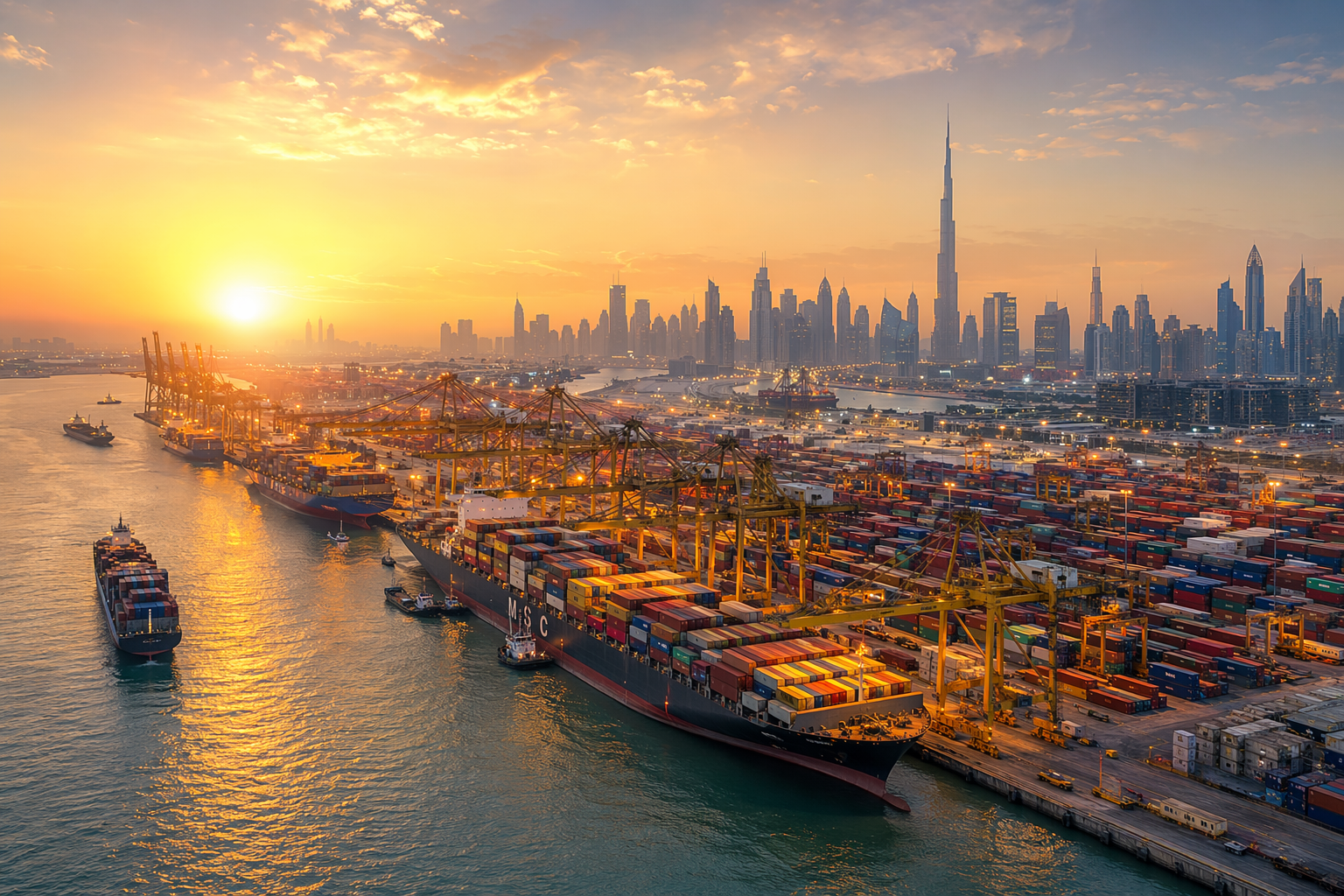
Dubai is a key spot for international trade. Because of this, customs clearance is something you cannot forget. If you bring in, store, or send out goods, dubai customs rules will impact your costs, time, and your business risk. The good thing is, the rules are fair and easy to follow once you know them well. With the right way of doing things, you can move your goods through Dubai in an easy way. You can lower extra duty costs and help your company grow into new places. That way, you do not have to make every shipment a big customs clearance problem.
Dubai has a big part in global trade. It links people who supply goods, places that store them, and buyers in many areas. A lot of companies use Dubai to get goods, keep them in storage, and send them somewhere else after. These businesses do not put their products into the UAE market to sell them locally.
For customs purposes, the difference is important. Goods that move through Dubai to be sent out again can use a different path than normal imports. This helps make trade operations easier for companies. They get more speed, better control of inventory, and a good way to reach many markets.
One reason that Dubai is good for international trade is because of its customs structure. Dubai customs helps people every day by using digital systems to clear goods. The wider policy and tariff rules are set by federal authorities. This gives businesses a clear framework to work with.
Another good thing about free zone operations is their strong setup. Goods that come into a free zone stay in customs control, and no duty needs to be paid unless these goods go to the UAE mainland or to another GCC country. If goods leave and go outside the GCC, you usually don't have to pay that duty at all.
You also get more ways to set up your business. A good trade license, keeping track of your inventory, and clean records help you use Dubai as a center for sending goods to new markets. The biggest tax advantage comes from not paying customs and being able to send things out without duty, not just from skipping rules. That is why it is important to follow the right steps as much as where you work.
Dubai builds its re-export system for reach. Through Jebel Ali Port and other shipping ways, businesses can send their goods to many destination country markets. They can keep their inventory in one place. This is good when demand changes fast in different places.
Customs departments usually look at the route that is given, the type of goods, where the goods come from, and all the paperwork. In BRICS and other new markets, the good thing about using customs comes from using a free zone that is already approved and making sure you file the shipment as a re-export the right way. It does not depend on who the buyer is or where they come from.
Key Dubai zones that people often use for these flows include:
Your top pick will depend on what kind of cargo you have, the way you move it, and how many times you need to ship to each market.
The customs clearance process in Dubai uses electronic filing. Each shipment gets checked and then released using the right customs platform. Many people take care of customs clearance by sending customs declarations through the Dubai Trade portal. They make sure that the goods they declare match the papers they send.
What is most important is being right. UAE customs duty often depends on a few things. These include the tariff treatment for that shipment, the HS code, and if the goods are going into the mainland or will stay in a controlled zone. Once you know this, it is much simpler to follow the steps you need.
If you want to re-export goods, you need to pick the right customs path first. Goods in a free zone that go out to markets outside the GCC are treated in a way that is not the same as goods that get cleared first in the mainland. The customs system should show this difference from the very start.
A common file will go through the customs procedures below:
After you file, customs may check your cargo using risk rules. When your shipment goes out, make sure to keep all of the completed records in a safe place. This proof is important if you want to show that you should not pay duty, ask for a refund, or answer any questions that come up later from customs departments or people who check these things.
Tax-free re-export needs proper documentation. You must make sure all paperwork is done right. If it is not complete or if there are mistakes, customs can slow down the process. They might ask questions about the route or even say no to your filing. Having good records is not just about following rules. They protect the whole deal.
The core documents usually include:
Your HS code should match your goods exactly. This hs code plays a part in controlling your shipment, what tariff it will have, and if you will need any extra permits. If it matches on your invoice, transport papers, and with customs, the shipment will clear faster. It also helps you if questions come up later.
A free zone in Dubai can help you save money, especially if your business is about storage, sending out products, and export. The main thing to know is this: free zone imports will stay under customs control. You do not have to pay duty unless the goods are sent into the UAE mainland market.
That is why many free zone companies choose Dubai to set up their work. In Dubai, places like Dubai South and Jebel Ali help with things like holding stock, putting things together, and sending goods out. Now, you might wonder which free zone in Dubai is best for your trade model and your target market.
Not every zone has the same job, but many are used a lot for re-export trade. They all share one thing, which is customs suspension. Goods can be kept, grouped, packed again, or changed a little while they stay under customs control inside a bonded area.
If your goods are later sent to Brazil, India, China, South Africa, or other places that are not in the GCC, you can usually ship them again without paying duty, as long as you declare the move the right way. This makes some zones very useful for free zone companies that are doing regional distribution.
| Free Zone | Main Re-Export Strength |
|---|---|
| Jebel Ali Free Zone | Strong sea freight access through Jebel Ali and large warehousing capacity |
| Dubai South | Logistics-focused setup with strong support for multimodal distribution |
| Dubai Airport Free Zone | Useful for time-sensitive or air cargo shipments |
| Other designated bonded area facilities | Help defer duty and support controlled storage before export |
The right zone for you will depend on your cargo flow, how you move your goods, and your setup for rules and compliance.
Free zone operations are helpful because they cut down on costs that can happen when you buy and sell. You do not need to pay duty right away when goods reach you. The goods can stay under customs until you need to move them out. This helps with cash flow and stops you from paying taxes you do not need to.
The tax benefit is real, but it does not happen without action. It works when goods stay out of the mainland and when filings, product details, and proof of export are kept simple and clear. When you send goods again to each destination country, you still need to look at the import taxes and local rules in their market.
Key advantages include:
For groups that work with BRICS and more, this mix can help make Dubai a good place to set up and run things.
Tax-free re-export in Dubai depends on how customs handle the process, not on any unofficial practice. The federal customs authority is in charge of setting policy and keeping tariffs the same. Local customs offices take care of the actual clearances. All of this happens under the common customs law.
In short, customs duty is not charged for goods kept in approved free zone buildings. This is true as long as the goods do not leave for the mainland. When these goods are sent out of the GCC and you give the right papers and proof, there will be no normal duty fee. Next, let us see how VAT and exemptions link to this for customs duty and free zone.
Many businesses think VAT and customs charges are the same, but they are not. UAE customs duty is charged when goods come into the country for mainland use. VAT is also charged on imports. This is usually 5% of the customs value, plus the customs duty and other costs.
The main thing to know is that customs duty and VAT are not the same. customs duty is for bringing goods in. VAT comes after, and it is added on top of the customs duty. This process is called uae customs duty.
For tax-free re-export structures, the most important rules focus on where the goods are kept and how they are sent. If the goods stay under customs’ watch in a set zone and go to a market outside the GCC, the normal rules for importing into the main land do not apply. This is why many re-export movements do not lead to the same VAT and duty charges as bringing goods in for local use.
You still need good proof. Customs forms, inventory lists, and papers for shipping must show the goods did not end up in the mainland. If the goods first went through local customs, there can be other rules. Sometimes you may even get back some duty in those cases.
Trade agreements can help lower customs taxes, but only if certain rules are met. The UAE has agreements and CEPAs with countries like India, Indonesia, Israel, and Türkiye. If the goods meet the rules about where they come from and what they are, these agreements can reduce or even stop customs duties.
You have to look at more than just the shipment route. The harmonized system code is important. The product coverage list matters, and you also need to know the origin rules. If your goods fit under an agreement and you have the right proof, the usual tariff rates may be different.
For re-exports to BRICS countries, what happens will depend on the agreement in place, the product you are sending, and if the goods follow the rules for origin under that agreement. Many businesses miss out on savings because they do not check if they're eligible. Some people think a lower rate applies without the right papers. Both of these mistakes can cost a lot.
Sending goods from Dubai to BRICS markets can be a good way to get things done fast. But it is not only about moving things out of the warehouse. The destination country will have its own rules, checks, and paperwork at the international borders. You need to know about these before you send anything.
Your export operations in Dubai need to follow local customs rules, check any duties, and make sure your products meet all controls. The tax benefit you get from re-exporting does not take away the need for being careful with the rules. The next sections talk about what each country needs from you, and what you have to check before your goods go out.
Customs clearance in Dubai for BRICS shipments with no local duty usually begins when you do the right re-export declaration. This should come from a free zone or a place where the stock is watched and kept safely. When you file this the right way, the next step is to look at what the destination country will need or ask for when your goods get there.
Most customs departments will check the value, goods description, and country of origin in detail. They might also need product-specific okays, depending on local rules. So, make sure your Dubai file for the send-out is ready before the cargo goes.
At a minimum, prepare:
The Dubai side can help save on duty. But the buyer must still follow the import law in the destination country. Good planning makes things easier for both sides when sending the shipment.
High-demand markets give people more chances to grow, but they also make it harder to keep up with the rules. In international trade, when goods move in a free zone, they are still watched by customs. Some products need extra checks before they can go out. This happens a lot when it comes to items that are used for more than one thing, or things that can be used in a special way.
You need to check the buyer, end-user, route, and how the goods are grouped. UAE rules say you have to do sanctions screening. If the goods are controlled, you may need to get permits from the right government agencies before you export or re-export. If you skip this step, the goods can be taken from you, you might have to pay fines, or you could face legal trouble.
Brazilian Export Processing Zones do not have a direct role in Dubai’s customs process. They matter more once the goods reach their destination. When shipping from Dubai, you must check how to classify your shipment the right way. You should get all the needed permits. It is also important to keep proof that the export followed all rules and was declared completely.
Even experienced trading companies can have trouble with Dubai customs if shipment data is done too fast or copied to many files. A big problem comes from incorrect HS code classification. If the HS code is not right, this can lead to the wrong duty being charged, more checks, or later review of the shipment.
Customs delays can happen if the documents do not match. They also happen when businesses think the broker will fix everything. A smoother customs clearance process starts with better checks inside the company. The next sections will talk about how to avoid fines and use the right tools for support.
Most re-export problems can be stopped before they start. Customs clearance will take more time if what you say about the goods does not fit with what is really there. It also slows down if values are missing, or if a company tries to run free zone operations as if they do not need to follow rules. A free zone is still under customs rules. Goods stay under customs control until they are fully checked and cleared.
Penalties can be tough if customs sees a wrong declaration or a move you did not get permission for. This is why it is important to check things at the start instead of waiting to fix mistakes at the port.
To reduce delays and penalties:
If you add these checks to what you do every day, you lower the risk of having holds. You also avoid fines and problems that customers might see.
Customs brokers can help, but you should not count only on them. The broker sends in the forms. But your business is still responsible for the shipment details, the product description, and any risks with the rules. This is important if customs asks you questions later.
Digital platforms help close gaps. In Dubai, the Dubai Trade portal makes it easy for people to file, check status, and keep records. If you use these tools the right way, warehouse work, shipping steps, and customs papers can all match up well.
A practical setup often includes:
This mix helps you get more speed and still keep good accuracy. That is often the safest way to scale export operations.
To sum up, the customs clearance process in Dubai gives you many chances to do tax-free re-exports. If you understand the rules and use Dubai’s strong place in the world, your business can run much better. When you know the main paperwork, customs procedures, and benefits of free zones, you can deal with most problems and make your re-export work easier, especially if you send goods to BRICS nations. As you start this process, getting advice from experts can help you handle hard parts. If you need more help, feel free to ask for a free consultation. Your path to getting the best re-export benefits begins now!
Rules of origin decide if goods can get lower tariffs in free trade deals or get special GCC origin treatment. This is different from just putting the country of origin on paper. The goods must pass a local content check or show they have been changed enough in line with the deal’s rule. If the goods meet these steps, and the right paper is there, they can get a better tariff than the normal rate.
For trading companies, this is often missed as a way to save money. The UAE has deals with several countries like India, Indonesia, Israel, and Türkiye. These deals can help lower fees for some goods. The important thing here is your product has to be on the covered list. You also need to show proof of where your product comes from. If you miss doing those checks, you might pay taxes that you could have made less or even not paid at all.
A clean import or re-export file starts with proper documentation. Customs wants the shipment record to be complete. It also needs to be clear and easy for people to check. This often means you must have a commercial invoice, a packing list, a transport paper, and origin evidence if needed. The bill of lading should match what is on the commercial invoice. If your bill of lading says one thing but the invoice says another, there could be a delay. This problem can happen even if customs does not inspect your shipment right away.
The same rule is true for moving goods in both the free zone and mainland. A clear import record from you helps customs see where the goods come from, where they are going, and what rules will be used on them. If needed, a certificate of origin can show lower tariffs should be used, or that the products match the import requirements of the country they are going to. Businesses that keep all their shipment records in order will have an easier time getting cargo cleared quickly. They will also be able to fight any doubts about value, and they can prove that goods were sent out rather than sold within the country.
The authorized economic operator program is made for businesses that follow the rules, keep their processes safe, and have solid trade controls. In the UAE, if your business gets this trusted-trader status, you can have several clear benefits. These include faster customs clearance, less time spent on inspections, needing to show fewer guarantees, and working better with customs authorities. For companies that move a lot of shipments, these benefits can help a lot in their day-to-day work.
AEO status is not given to everyone by default, and not every business needs it. The AEO program is something you can choose if you want. To get it, you have to let people check your rules and the way you do things. If your business deals with a lot of import or export goods, AEO could be good for you. AEO is not about getting a fancy title or status. The big reason people get AEO is for easier and faster movement, less trouble at the border, and more trust from customs. AEO shows customs that your paperwork, your security, and your way of following rules can be counted on over time.
Customs duty is just one cost you might have to pay. There can be extra charges, like anti-dumping or countervailing duty, for some goods from certain countries. These extra rules are put in place if goods are sold for less than they should be. Sometimes, it happens when a country's government helps its makers in a way that isn't fair for trade. When these charges apply, you have to pay them on top of the standard customs duty.
That is why it is so important to know where a product is from and how it is classified. A product can look the same as another. But if it comes from a different place or falls in a different group, the applicable duties can change. Companies that get their goods from many places should watch official notices all the time. They also need to check on products that may be hit by new rules. If what you have to ship is now in a group that faces higher duties, you can look at getting your product from some other place. You might also spend more time on how the product is sorted. Or, you can make a new plan for your supply chain. This way, you can cut costs and avoid trouble when the goods arrive.
Customs and VAT often get mixed up or confused. When you bring goods into the country, you usually pay 5% import VAT. This 5% is worked out on the customs value. You add in the duty and a few other things to get this customs value. For businesses that are signed up for VAT, you can use the reverse charge. This helps keep cash flow running smooth. Still, you need to keep the right customs records to show that you did things right. If you are using a model where goods are taken out of the country again without tax, the customs route you take is important. It decides if you will need to pay import VAT on the mainland at all.
Corporate tax brings in another factor. Customs charges are usually business costs you can deduct. Customs declarations are also part of the records you need for taxes. This shows that customs cannot be fully separate from your finance team. If your details about value, duty, or movement are not good, then problems can go beyond the border. A strong link between customs, VAT, and corporate tax helps keep your reports clear and your business in good shape to explain things.
Sanctions compliance plays a big part in re-export control in the UAE. Before shipping any goods, a business needs to check buyers, end-users, consignees, and other connected people or groups with the right sanctions lists. The UAE national and UN rules matter a lot, but many businesses also check more lists, mostly when banking or selling products could make it needed. This is not just for show. It is a real part of safe customs clearance and good export practice.
Government agencies can get involved when it comes to dual-use or strategic goods. In these cases, the classification, permits, and checking who will use the goods are as important as the customs declaration. A free zone does not take away these duties. The goods still need to be watched by customs. If the screening is not done well, shipments can be stopped, or there could be penalties and other actions. Good screening is one of the best things any trading business can do for control.
Not always. If export goods stay under customs control in a special free zone and are sent out as a tax-free re-export, you may not have to pay the normal mainland customs duty. If the goods are cleared in the local market first, the way VAT and UAE customs duty is handled can change. So, your customs clearance path is very important.
You will often need a commercial invoice, a packing list, a bill of lading or an air waybill, and a certificate of origin if that is needed. These documents must match with your customs declarations. This will help you for customs purposes. If you need any permits for the goods or the place you are sending them to, be sure to add these before you file. This can help you avoid any holds.
Not every free zone matches with each kind of cargo flow. Free zones that focus on logistics can help you re-export goods to BRICS markets without duty. The key things to look at are the customs clearance process, how your export operations are set up, and if the shipment is declared right for the destination country. You need to do this without letting the goods enter the UAE mainland.
Customs clearance often begins when you store goods under free zone operations. You then need to file the right customs declarations if you want to export these goods to a market outside the GCC. If the goods do not enter the mainland, you usually do not have to pay the standard customs duty. But when your cargo reaches its BRICS destination, the country's import rules still apply.
A normal file will have a commercial invoice, a packing list, a bill of lading or an airway bill, and a certificate of origin if it is needed. The customs system must show the right declaration type. Keep the final proof of exit. This helps prove you are tax-free and can help if there are questions later.
Jebel Ali and Dubai South are two important choices because they help with big re-export work under free zone or bonded area rules. The main benefit is not a special BRICS tariff. The real advantage is that customs duty does not have to be paid while goods stay in customs control before they go out for export.
Yes, but these steps follow a set process and are not done right away. The most important rules for exemption are keeping the goods in a set area and finishing the right tax-free re-export. In international trade with new markets, you often get the saving because no customs duty needs to be paid right away, not because you skip following the rules.
The customs clearance process starts when you choose the right declaration type. You need to put in all details about the shipment and submit customs declarations, along with the needed documents. You should also track the release using the Dubai Trade portal. If needed, keep a copy of your bill of entry, any transport proof, and the final export operations papers. Hold on to these records for the customs clearance process.
Yes. A lot of free zone companies keep and send export goods from a Dubai free zone to BRICS countries. This helps them avoid paying customs duty, as long as the goods do not go into the uae mainland. You still need the right documents and have to make true declarations. You also need to follow the import rules of the other country.
Trade agreements can lower customs taxes if the goods meet the coverage and origin rules. For BRICS shipments, it all depends on the exact agreement, the harmonized system code, and the paperwork. If these do not match, then the applicable duties may still be charged when the goods arrive.
Common issues can slow down customs clearance. A few of these are customs delays because of documents that do not match, incorrect hs code classification, not having good support for valuation, and missing permits or screening checks. For trading companies, these problems can cause penalties and stop the customs clearance process. The good news is most of these issues are easy to avoid. A stronger check before filing and better record control can help a lot.
It depends on how the goods move. In many cases where re-export is tax-free, the goods stay under the eye of customs. The goods then leave the country without the normal import process in the mainland. If the goods are brought in first and then imported within the country, you may have to pay VAT and customs duty before any later export operations in international trade.
The guidance that has been put together does not give Brazilian Export Processing Zones any big part in the re-export steps on Dubai’s end. These zones matter more in Brazil, but not for dubai customs or their customs departments. What matters for the UAE is to file re-exports the right way and to keep proof of exit for these goods.
Knowing about customs value calculation and HS code classification is very important. It helps you follow Dubai customs rules. It also helps you save money during the re-export process. The customs value is set by looking at the price you paid for the goods. The value also includes other costs. These can be for freight, insurance, and handling before the goods enter Dubai.
The right HS code classification matters a lot. It affects duty rates and what rules you must follow for your goods. Every product gets its own HS code. This code comes from the Harmonized System, which is used for classifying different products. If you use the wrong code, you might get a fine or your goods may be delayed.
Because of this, you need to research well. Check both the customs value and HS code. You must state them in your documents the correct way. Doing this will help your customs clearance go well and on time with dubai customs. Using the correct hs code classification will also make the customs clearance process much easier.
Understanding the rules of origin is very important for businesses that want to use free trade agreements (FTAs) to get lower tariffs on exports from Dubai. To get these benefits, goods need the right certificate. They must also meet certain rules. For example, a product might need local content or must be changed enough in Dubai to qualify.
When sending goods again to BRICS countries, these rules can have a big impact on cost and following the law. The UAE has FTAs with countries such as India, Indonesia, and Türkiye. If your product meets the rules in these FTAs, you may pay less in tariffs. A lot of businesses do not check if their products follow FTA rules and then miss out on saving money.
To get these FTA benefits, you must keep good records that show where your goods come from. Good paperwork will help you meet both the local laws and the FTA requirements. This step is needed for all businesses that want to get the most from free trade deals.
A clean import or re-export file begins with proper documentation. Customs want the shipment record to be complete, clear, and simple to check. There are some important papers you need to have. These usually include a commercial invoice that gives the value and details about your goods. A packing list should match the number and type of items. A transport document, like a bill of lading or airway bill, also needs to be there. Sometimes, you may also need a certificate of origin.
If there is a difference, like the commercial invoice saying one thing and the packing list showing another, this can cause long delays. This can happen even before a physical check of your goods. This idea is also true if you move goods between free zones and the mainland. A clean import record helps customs to see where your items came from and where they will go. This makes sure the right tariff is used.
When you get your papers ready the right way, customs clearance becomes easier. It also helps you follow all rules and show proof that your goods were sent out again, not used locally.
The Authorized Economic Operator (AEO) Program plays an important role for businesses that want to improve how they handle customs clearance. This program is open for companies that want to show they have strong safety checks and good rules in place across their supply chain.
Being AEO certified can give a business several key benefits. A company can get goods cleared faster by customs. They might face fewer checks and not get stopped as often for inspections, which helps save money and time. Having AEO status will also boost the company's image and make customs officials and partners trust them more.
To become AEO certified, a business must have the right papers, a strong plan for following rules, and review their ways of working often to match AEO needs. For companies working in international trade, the AEO program makes it easier to deal with rules and customs checks. This means being AEO certified can help if you want to make your business in Dubai run better and faster.
How customs, VAT, and corporate tax work together is very important for anyone in international trade in Dubai. When you import goods, you usually have to pay VAT at 5% based on the customs value, plus any applicable duties. But, if your business works in a free zone under a tax-free re-export model, whether or not you have to pay VAT depends on the customs process followed. If the goods stay under customs control in a free zone and then go straight to a country outside the GCC, you can avoid the normal import VAT you would pay in the mainland.
To make sure you follow the rules, you must keep good records, as this helps show what happens with your goods and can stop you from having to pay extra taxes by mistake. Corporate tax is also involved, since customs charges are often counted as costs you can claim in your business tax return. Having a plan to match how you deal with customs, VAT, and corporate tax is key. This helps you stay on the right side of the law, keep things clear, and look after the money side of running your international trade business in Dubai’s busy market, including the free zone.
Navigating rules for dual-use goods, export controls, and compliance permits is important for any business working in international trade from Dubai. Dual-use items are watched closely. This is because they can be used for both normal and military needs. So, you have to know the rules for these products because they can change based on the destination country.
Dubai customs want businesses to have the right export permits for dual-use goods. This helps stop any chance for misuse. Before shipping out any goods, take time to check the end-users and what they will do with the products. This makes sure you follow UAE rules and other standards in international trade.
If you do not get the needed permits or put your goods in the wrong group, you may get big penalties. There might be shipment seizures or even legal trouble. It is a good idea to have strong internal checks and always work in line with the laws. This way, your company can handle rules about dual-use goods better. It can also help you to build trust and reliability when doing business around the world.
Sanctions compliance is something that every business in Dubai must take seriously during customs clearance, especially for re-exporting goods. Before shipping anything out from the UAE, you have to check all the people and companies involved. This includes buyers, end-users, consignees, and any other linked groups. You need to make sure you are following rules set by both the UAE and the United Nations. This is how you help stop illegal trade and make sure the goods do not end up with the wrong people.
The risks of not following these rules are high. You can get your shipments stopped, face big fines, or get into legal trouble. When you are dealing with dual-use goods or things used for special reasons, there are even more checks. You might need extra paperwork or permits. Because of this, it is important to set up a strong process for screening and always keep up with new laws. Doing so will help you stay compliant during customs clearance and protect your business as you trade globally.
Customs penalties and paying too much can have a big impact on businesses that re-export from Dubai. A lot of the time, there are delays in the customs clearance process because people do not report their goods with the right codes or give all needed paperwork. Sometimes, businesses also make mistakes and do not pay the right amount for duties or charges like VAT. For example, customs will often give big fines or stop the goods if they do not get clear documents or the details do not match the HS codes. Overpaying often happens when companies guess the applicable duties wrong during the customs clearance and declaration step. This causes money problems for the business and slows down how they operate, making their daily work harder.
Because of this, there are important steps that all companies should follow. It is important for businesses to keep good records, check all their documents many times, and set up strong controls inside the company. This helps be sure they always follow customs rules. By finding these problems early, companies can lower their chances of getting fined. They will also move faster through the customs clearance process. This lets them put time and money into growing their business and making more profit instead of worrying about rules or getting penalized.
Many people who run a business in Dubai often ask about customs clearance and re-export of goods. Some want to know how the process works. They also want to know what it means for their company. It is good to understand how customs clearance works in this area. This will help your business to do well. Here are some of the most asked questions:
Each question here shows the main things a business has to think about when they work with customs in Dubai. When companies prepare well and understand the rules, they can make the most of re-export chances there.
Dubai Customs helps make customs clearance quick and easy. It also lets people and companies send goods out again to other countries, like the BRICS nations, without paying taxes. This is a key part of how dubai customs works.
Disclaimer: This article is provided solely for general informational and SEO purposes and does not constitute legal, regulatory, or professional advice. We do not participate in, facilitate, promote, or advise on any activity intended to circumvent or evade applicable laws, regulations, restrictive measures, trade controls, or sanctions imposed by any jurisdiction, including, but not limited to, the United Arab Emirates (UAE), the United States (USA), the European Union (EU), Japan, and the Russian Federation. Readers are responsible for ensuring their activities comply with all applicable laws and regulations.