

For businesses aiming to import construction materials to Dubai, grasping the UAE's Federal Customs Authority's regulations is imperative. Whether you're an experienced importer or new to the Gulf, understanding customs procedures, documentation needs, and restricted items is crucial. This section aims to elucidate the essential rules and regulations for importing construction commodities to the UAE.
The UAE's customs policies are federally established, with each emirate possessing its own customs authorities. These offices are located at airports, seaports, and land borders, facilitating the smooth entry of goods. To initiate the import process, your UAE-based company must possess a trade license from the Department of Economic Development (DED) in the relevant emirate.
Foreign companies can engage in UAE "mainland" business by establishing an office or appointing a UAE national as sponsor, agent, or distributor. Alternatively, Free Trade Zone (FTZ) companies can use their FTZ-issued trade license for importing goods within that zone.
To finalize the import process, the UAE-based company must obtain a delivery order from the shipping agent. They must also submit standard trade documentation, such as a commercial invoice, certificate of origin, packing list, and any necessary import permits. By understanding these requirements, you'll be well-prepared to import construction materials to Dubai while adhering to the country's stringent customs regulations.
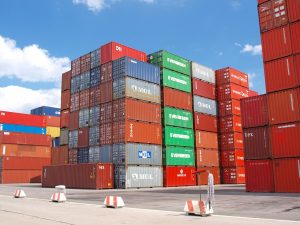
Exploring the import landscape within the United Arab Emirates (UAE) demands a profound comprehension of its intricate regulations and guidelines. As a pivotal hub for international trade, the UAE has crafted a stringent customs framework. This framework is designed to safeguard its local economy, bolster national security, and augment government revenue.
To facilitate the importation of goods into the UAE, entities must acquire the appropriate trade license from the Department of Economic Development (DED) within the relevant emirate. Foreign entities have the option to either establish a UAE office or appoint a local sponsor, agent, or distributor. This is necessary for conducting business on the "mainland" (beyond the confines of free trade zones).
Importers are obligated to present a detailed array of standard trade documentation. This includes a commercial invoice, certificate of origin, packing list, and import permit (if applicable).
| Mandatory Import Documents | |
|---|---|
|
Importing construction materials to Dubai necessitates a thorough understanding of several critical factors. The nature of the materials, the shipment's size and weight, the destination country, and the chosen shipping method are all pivotal. These elements collectively ensure a compliant and successful import process.
Items of a fragile nature may necessitate shipment in crates or on pallets, whereas hazardous materials demand specialized containers with accurate labeling. The transportation of larger, heavier shipments typically employs ocean freight, whereas smaller consignments are more suited to air freight. It is imperative to delve into the customs regulations of the destination country, as certain nations impose restrictions on permissible shipments and their handling.
Collaboration with a reputable shipping entity is indispensable for the safe and punctual delivery of construction materials. Such companies are adept at navigating the intricate regulatory landscape, providing the necessary documentation and ensuring adherence to all pertinent rules.
| Regulation | Details |
|---|---|
| Customs Duties | 5% customs duties are levied on the CIF value of goods when imported into Dubai. Goods valued below AED 1,000 in express shipments are exempt from duty. |
To import goods into the UAE, companies must possess a trade license from the Department of Economic Development (DED) of the respective emirate. Foreign entities can either establish a presence in the UAE or appoint a UAE national as a sponsor, agent, or distributor to conduct business within the "mainland" (excluding free zones). Entities operating within a Free Trade Zone (FTZ) can leverage their trade license for importing goods into that specific FTZ. The UAE-based entity (consignee/agent) must obtain a delivery order from the shipping agent. They then submit the original standard trade documentation, encompassing a commercial invoice, certificate of origin, packing list, and import permit if applicable.
When importing construction materials to Dubai, several factors must be taken into account. The nature of the materials, the shipment's size and weight, the destination country, and the chosen shipping method are critical considerations. Fragile items necessitate shipping in crates or on pallets, while hazardous materials require special containers with appropriate labeling. Ocean freight is typically used for larger, heavier shipments, whereas air freight is more suitable for smaller consignments. Prior to shipping, it is imperative to research the destination country's customs regulations, as some countries impose restrictions on certain items and shipping methods. Engaging with a reputable shipping company is crucial to guarantee the safe and timely delivery of materials.
The UAE government enforces strict regulations on imported goods to safeguard public safety, protect the environment, and uphold cultural values. Key restrictions apply to food and agricultural products, firearms, hazardous materials, and counterfeit goods. Prohibited items include controlled drugs and illicit substances, pirated media and counterfeit products, fireworks and explosives, objects linked to black magic, and publications, artworks, and media that contravene Islamic principles. The UAE also restricts products posing environmental and health risks, such as single-use plastics, synthetic nicotine products, and personal care items containing microplastics.